

-
The Domenico Dragonetti® instrument selection is curated and recommended by professional artists who also teach music.
-
-
We rent and sell easy-to-play, properly sized string instruments.
-
At our shop, you'll receive honest, expert advice, and we'll happily customise your violin, viola, or cello.
-
-
“Properly sized” means the instrument fits the player so they can hold and play it comfortably with correct posture and hand position. A good fit makes learning and playing easier, improves tone and intonation, and reduces the risk of tension or injury.
-
What it covers ?
-
Body/scale size: the instrument’s physical size (fractional sizes for student instruments: 1/16 → 1/10 → 1/8 → 1/4 → 1/2 → 3/4 → 4/4 for violins; similar fractions exist for cellos and violas).
-
Neck and fingerboard length: determines reach and spacing between notes.
-
String action and setup: string height, bridge shape and nut height—affects playability even if the size is close.
-
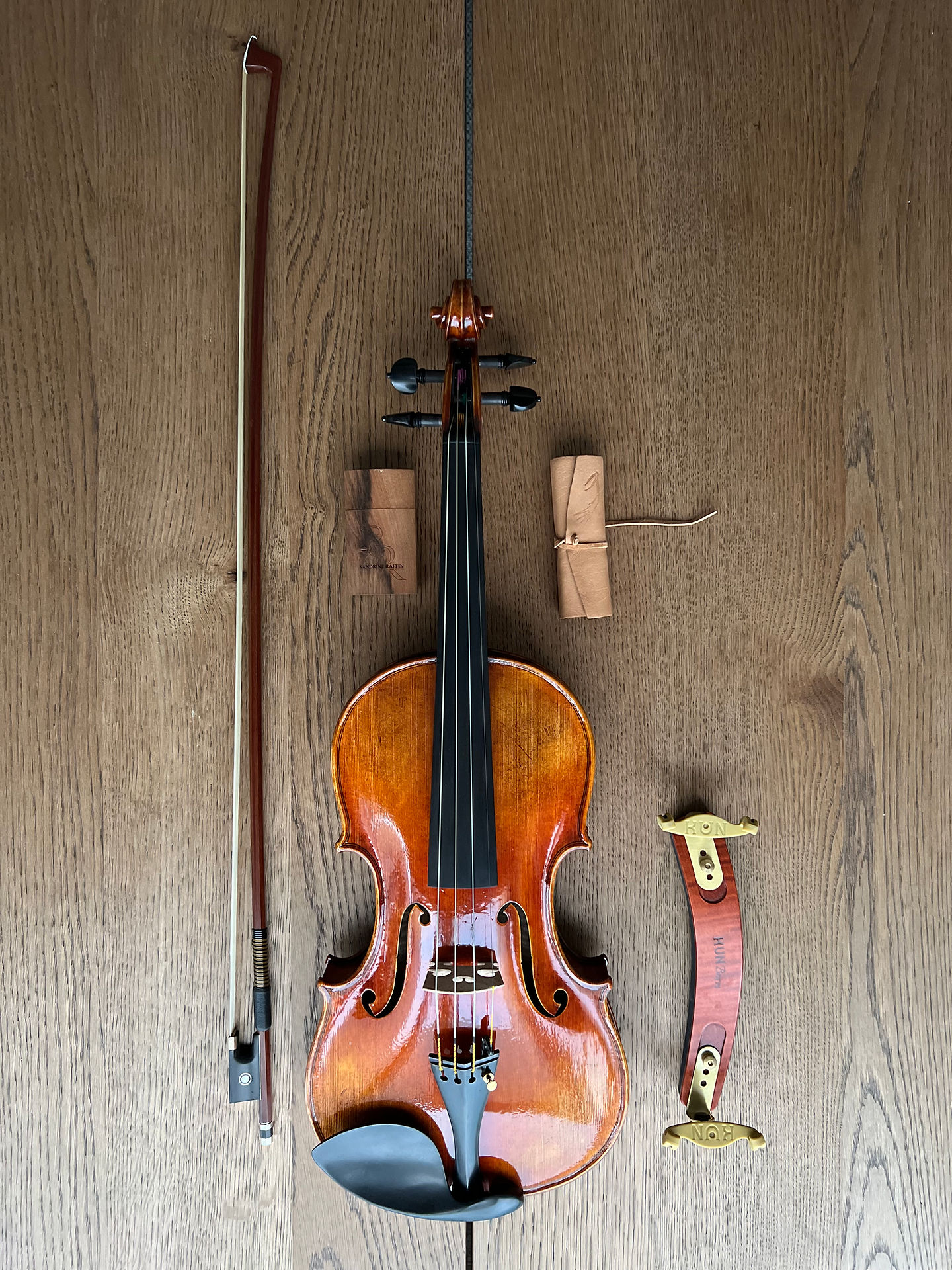
Accessories and adjustments: chinrest, shoulder rest, tailgut and endpin length (cellos) that help position an instrument to fit a player’s body.
-
Why it matters ?
-
Comfort and posture: easier to maintain correct arm/elbow/shoulder positions.
-
Technique development: appropriate finger spacing and reach tone, helps to achieve accurate intonation, so optimal, faster progress.
-
Tone and control: correct hand position and bowing comfort improve sound.
-
Injury prevention: reduces strain, tension and the likelihood of repetitive-stress problems.
-
How to check sizing (practical)
-
Try before you buy: the best test is to have the player hold and play the instrument.
-
Arm-measure method (common guideline): have the player extend their left arm horizontally; measure from the neck (where the violin rests) to the middle of the palm — a dealer can match this measurement to the right fractional size. (Exact charts vary by maker—this is a quick shop test.)
-
Watch the left hand and elbow: with the instrument held correctly, the left hand should reach the fingerboard comfortably; the elbow should sit under the wrist so fingers fall naturally on the fingerboard.
-
Adjust accessories: you can often fine-tune fit with a different chinrest, shoulder rest, or minor setup work.


